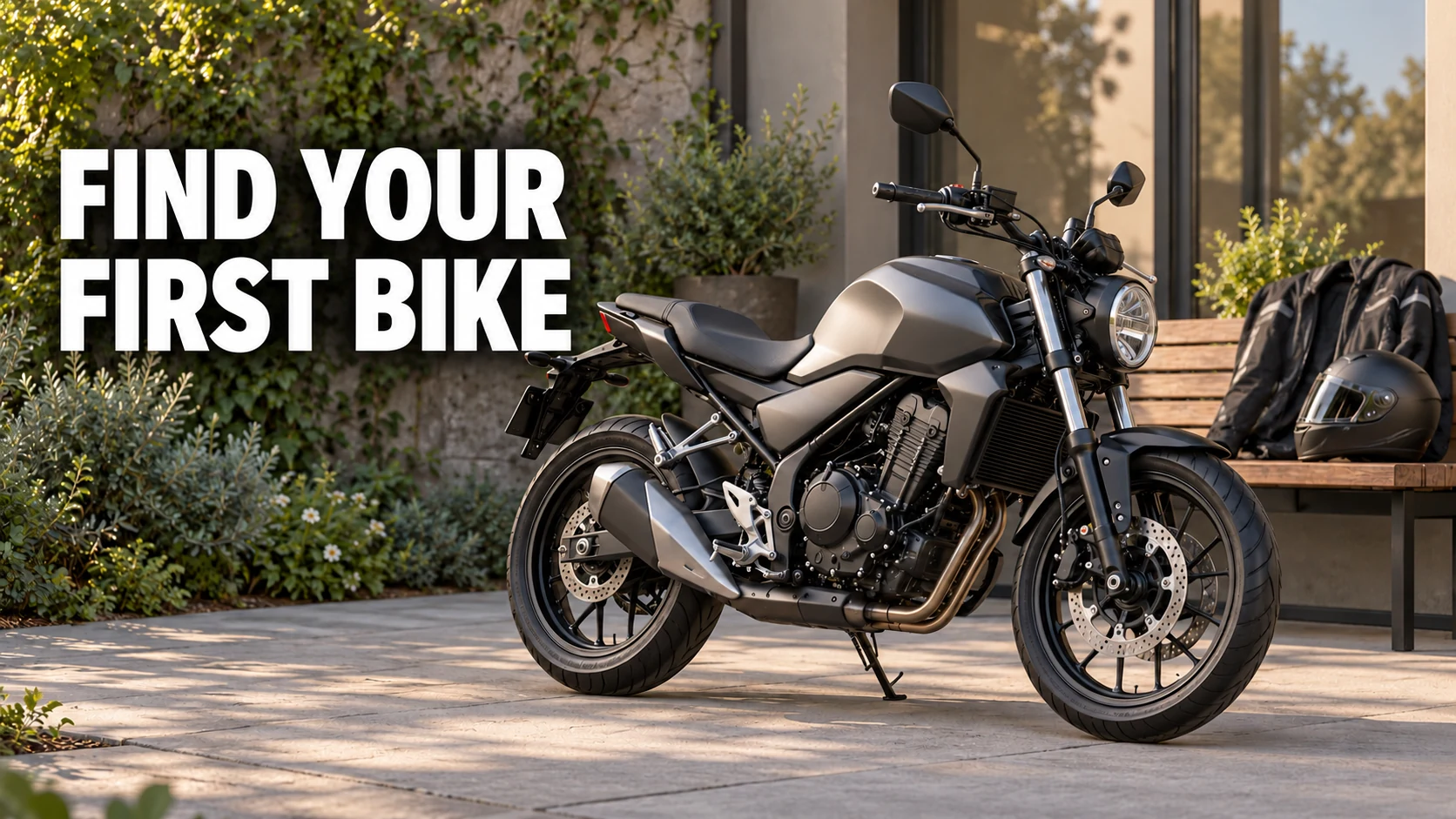
Your first motorcycle should make the next sensible step possible: taking instruction, getting properly licensed, and learning a machine that fits your circumstances. An attractive motorcycle that leaves no money for equipment or makes you uncomfortable before it even moves is a poor starting point.
Begin with training and a realistic riding plan
Describe the riding you expect to do first, rather than the trip you might take someday. Write down where you will keep the motorcycle, the routes you expect to use, and how you will get to a training course. These answers help you discuss your needs with an instructor and narrow the kinds of machines worth considering.
The Motorcycle Safety Foundation's beginner programs provide an organized starting point for new riders. Ask the local provider about prerequisites, equipment, supplied motorcycles, and state licensing recognition. Do not assume every course or location offers identical arrangements.
Training also gives you a better vocabulary for shopping. Instead of saying that a bike feels intimidating, you may be able to explain that the controls are difficult to reach or the riding position feels cramped. You can bring those observations to a supervised showroom fitting without turning a purchase visit into an improvised riding lesson.
Check your reach with the motorcycle safely supported
A seat-height number is a screening tool, not a fitting appointment. Seat shape, your footwear, and the position of the controls all affect the experience. Have dealership staff arrange a stable, supported check with the engine off. Do not try to prove that you can catch a leaning motorcycle or move an unfamiliar heavy machine alone.
Notice whether your shoulders remain relaxed while you reach the handlebar. Ask staff to show how your hands should meet the controls and whether approved adjustment is available. Check foot-control reach as well as the distance to the ground. A low seat is not helpful if another part of the position leaves you stretching or cramped.
Stay seated long enough to identify obvious pressure or awkwardness. Record the concern rather than accepting an immediate promise that you will get used to it. If a change is proposed, ask what it affects and whether the manufacturer supports it. Do not buy around an unpriced modification that has not been assessed.
For example, one candidate may let you reach the ground comfortably but leave your arms stretched. Another may have a slightly taller seat with a narrower shape and easier control reach. Neither wins from the brochure alone. Compare the supported fitting and discuss the remaining uncertainty with your instructor.
Compare naked bikes and small cruisers by position
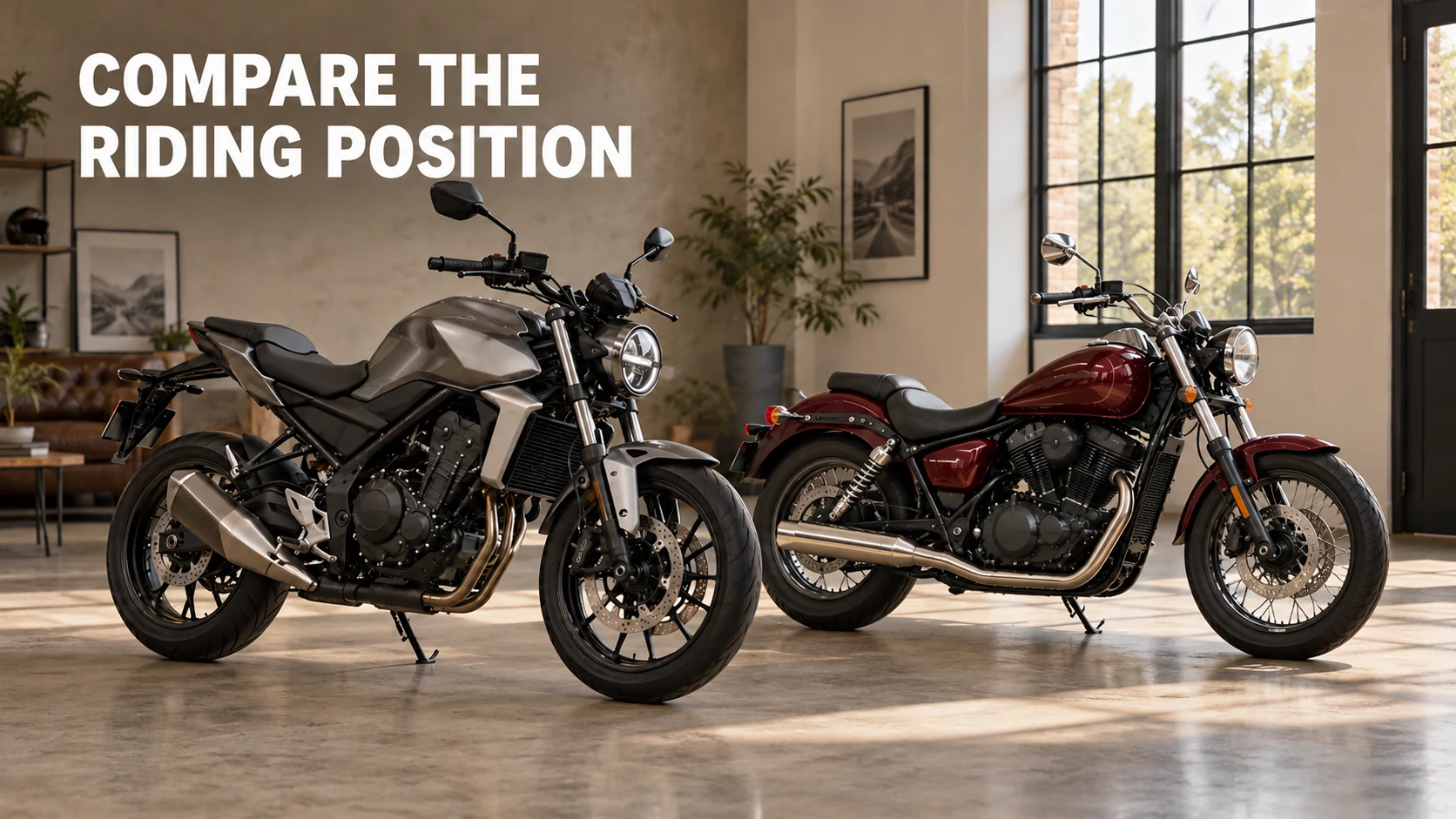
Use these category names to organize a shortlist, then look at individual motorcycles. Look at where the seat, handlebar, and foot controls sit in relation to one another. Decide whether the resulting position works for your body before being persuaded by a style description.
Manufacturer pages show why the exact version matters. The current Honda Rebel 300 page describes an E-Clutch configuration, while Yamaha provides model-specific information for the MT-03. These are examples of specifications to inspect, not a recommendation or a hands-on comparison. An older used motorcycle bearing a familiar model name may have different equipment.
For a practical fit check, compare reach to the bars and controls, footpeg position, steering movement, stand use, and low-speed handling on the exact model and year. Treat this as an ergonomic screen, not proof that one motorcycle style is inherently beginner-friendly.
Look beyond engine displacement and brochure weight
Do not turn a displacement number into an automatic permission slip. Ask about the exact motorcycle's controls, response, transmission, and equipment, and discuss its suitability with a qualified instructor. A familiar engine-size category cannot tell you how comfortable you will be with a particular machine.
When comparing published weights, read the definition alongside the number. Do not compare an unloaded or dry figure from one listing with a ready-to-ride figure from another as though they describe the same condition. Also list any luggage or accessories fitted to the actual motorcycle you are considering.
Think through storage before committing. A motorcycle that looks manageable on a level showroom floor still has to fit your own parking space. Note slopes, tight gates, shared access, and whether you would need assistance. Describe those conditions to the dealer. Arrange delivery or another appropriate solution rather than improvising a risky first journey home.
If you are unsure, keep the candidate on hold. The purpose of a shortlist is to remove unresolved choices, not to turn every concern into a challenge. A different motorcycle, more instruction, or a later purchase may be the practical answer.
Choose new or used with the condition in view
A new motorcycle lets you review the current specification and written warranty before purchase. It still needs to fit you, and you still need to understand the full transaction. Ask for an itemized purchase total and identify optional products separately. A low advertised payment does not describe the whole commitment.
For a used bike, ask for service records, ownership documents, and permission for an independent assessment by a qualified motorcycle technician. Give the technician the exact model and any concerns. Obtain the scope and findings in writing; do not treat a short seller demonstration as a condition report.
Inspecting the documents and arranging professional assessment are different tasks from learning to ride. You do not need to diagnose unfamiliar machinery yourself to be a careful buyer. Ask the seller to explain modifications and have their implications assessed. An attractive accessory does not automatically improve suitability for a beginner.
Budget any identified work before negotiating. If the motorcycle needs attention, decide whether you want to organize that work at all. A discount may change the price, but it does not complete the repair or reduce the need for a reliable assessment.
Confirm the safety equipment on the actual bike
Ask specifically whether the exact model, year, and version has ABS, then confirm the answer in the manufacturer's documentation and on the motorcycle with knowledgeable staff. Do not infer equipment from a photograph of a similar version. Ask for an explanation of the system and its limits in the owner's manual.
Keep equipment and training as separate parts of the decision. No feature removes the need to develop skills and judgment. NHTSA's motorcycle guidance addresses licensing, familiarization, protective equipment, and checks before riding. Use your state's licensing authority and course provider to confirm the steps that apply to you.
Arrange properly fitting riding equipment before planning to collect the motorcycle. Include a DOT-compliant motorcycle helmet in your US shopping plan, and ask the training provider what additional equipment its course requires. Do not leave these purchases to whatever money remains after a deposit.
Build an ownership budget before choosing a winner
Make separate rows for the motorcycle, transaction costs, training, riding equipment, insurance, storage, and maintenance. Add financing terms if relevant. Mark amounts as confirmed, quoted, or unknown so that an incomplete worksheet does not look like a complete budget.
Request insurance information for the actual candidate and your intended use before committing. Ask when coverage starts and what conditions you must meet. Compare like-for-like assumptions rather than assuming a similar engine size produces the same quote. Keep the written information for your decision.
Imagine that two bikes fit reasonably well. One leaves room for training, equipment, and identified maintenance; the other consumes the purchase budget before those rows are filled. The useful comparison is the complete commitment, not which bike has the more exciting listing.
Continue
The supported fit works, the exact equipment and condition are understood, and the complete budget is realistic.
Pause
You still need instruction, a professional assessment, an equipment answer, or a workable storage plan.
Keep a short written record for each finalist. Include what worked, what did not, and who can resolve each unanswered question. You are ready to choose when the evidence supports the purchase, not simply when a seller says the offer ends.